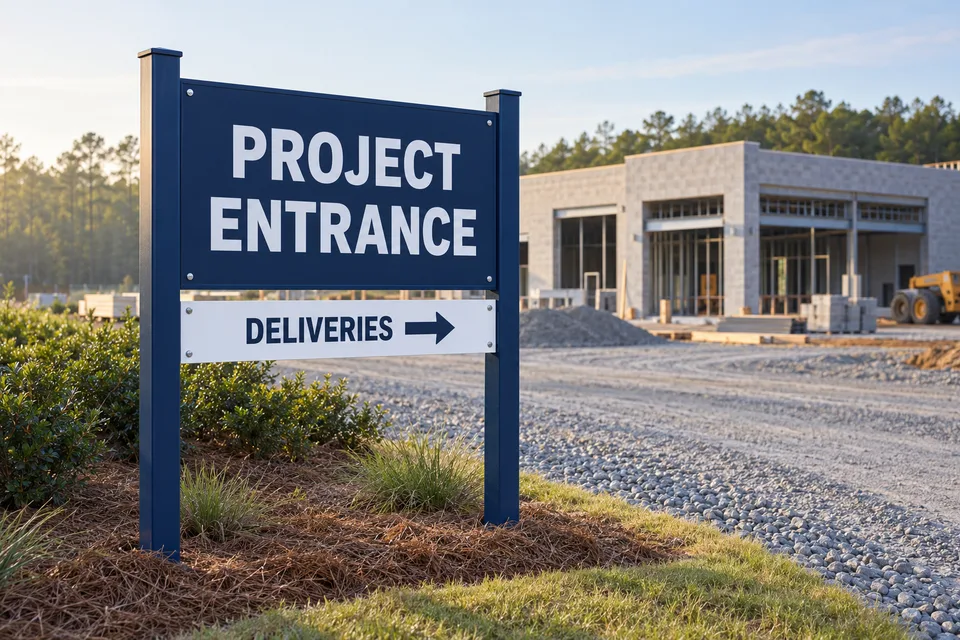
A developer name may stay on a project board for the whole build. A specialist contractor, leasing contact or financing partner may need a different display period. When those details are printed as one composition, a modest update can become a complete artwork revision. A panel plan makes the changing information visible in the purchasing decision.
Sort information by its expected life
Write the project name, partner names and public contact information on separate lines. Ask the project team which items are confirmed, which may change and which need to appear together. This exercise is about the board's communication role; operational notices and required project signage need their own review by the responsible team.
For example, an established project identity might occupy a permanent top section, while a row below carries approved partner logos. A leasing telephone number could sit in a smaller replaceable zone. The important point is to make those zones deliberate instead of cutting an existing design into pieces after a change arrives.
Choose divisions that remain visually balanced
Panel joints should work with the artwork. A vertical division through a logo or a horizontal division through small text will make the board feel improvised. Ask to see both the complete layout and a drawing showing the individual sections. Check how the arrangement looks if one partner position is temporarily blank.
Explore post and panel signs when comparing a freestanding format. The sign provider can assess the proposed assembly and replacement method for the actual site. A drawing of neat rectangles is not, by itself, confirmation that every rectangle can be independently removed.
Assign one person to collect partner artwork
Several organizations supplying files independently can produce inconsistent versions, missing approval emails and last-minute requests. Give one project contact responsibility for the complete artwork list. Ask each partner to provide its approved logo and the name that should accompany it, if any, rather than extracting a small image from a website.
Create a simple register with the partner name, file version, approval contact and intended panel. Confirm whether logos should receive equal visual emphasis or follow a hierarchy already approved by the project. That decision belongs to the client team, not to an assumption made during layout.
Specify what a future change actually includes
Request a clear explanation of the update process: revised artwork, replacement material, removal of the previous piece and installation of the new one. Some changes may be suitable for vinyl graphics; others may need a new panel. Surface condition, existing graphics and the original fabrication all affect that choice.
Keep the original dimensions and approved colors with the project record. Photograph the board after installation from straight on and from its normal viewing position. Those images help a later reviewer understand which panel is changing and whether adjacent information still matches the current project.
Review the board as a complete message
Replaceable components should still read as one organized sign. Check the project name first, partner information second and public contact detail at the distance where it is intended to be read. If every organization asks for a longer tagline, revisit the hierarchy instead of steadily shrinking all the text.
For construction signage in Chapel Hill, bring the project identity, partner list and a marked photograph to the first discussion. Request a project-board quote with the anticipated changes as well as the initial layout, so the proposal can account for the board's working life.