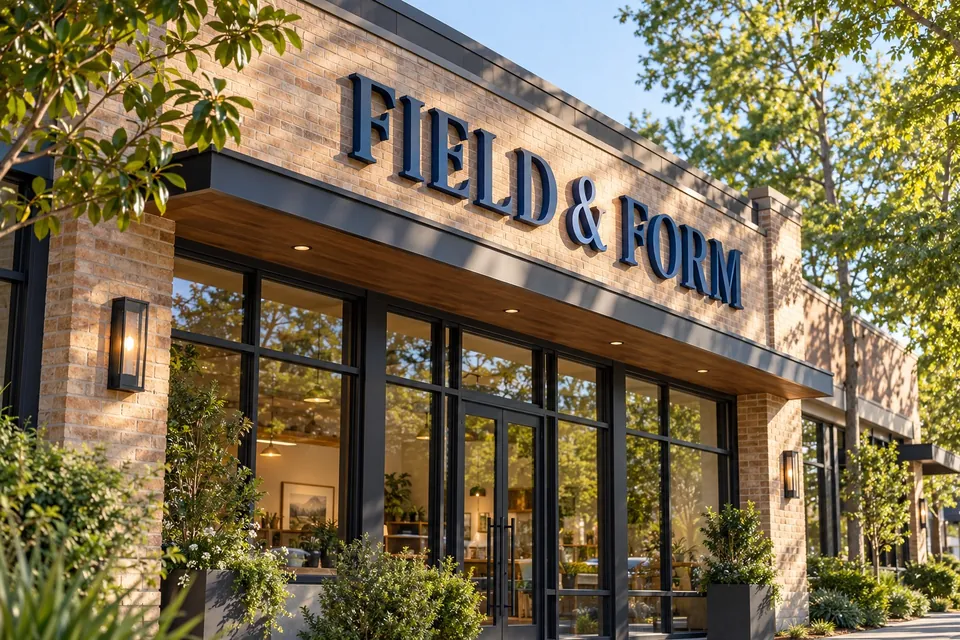
A restaurant awning can become a useful part of the address people remember: the name above the door, a distinctive color and an entrance that feels easy to identify. It can also become an overloaded list. For a Carrboro restaurant considering new lettering, begin by treating the valance as one part of the frontage rather than the restaurant's entire advertising space.
Choose the message that earns the first glance
Write the restaurant name exactly as it appears in reservations, online listings and customer messages. Then ask whether a short cuisine descriptor helps a newcomer understand the business. A distinctive name followed by “Italian kitchen” may answer a useful question; repeating a phrase already embedded in the name may add little.
Compare a name-only layout with a name-and-descriptor layout at the same physical size. If the descriptor forces the name into a noticeably smaller treatment, consider moving it to another surface. The purpose of awning signage is clearer when the viewer can recognize the identity without reading several competing lines.
Design for the actual fabric face
A valance is not an unlimited rectangle. Record its height, the usable width of each section, seams, scallops and any breaks around supports. Photograph the awning straight on and from each normal sidewalk approach. Include the whole storefront so the designer can see what the lettering needs to relate to.
A photograph alone does not establish the condition of the fabric or whether existing lettering can be replaced cleanly. Ask for an assessment of the current awning and the proposed application. An attractive new layout may call for a different production approach from a simple change to an existing surface.
Give close-range details another home
Hours, a reservation address and a pickup instruction normally serve a different moment from recognizing the restaurant. Collect those details separately instead of trying to fit them into the main name treatment. Window lettering may provide an appropriate place for information read at the door, subject to the glass and the restaurant's visibility needs.
- Keep the restaurant name consistent across the awning and entrance.
- Put the approved door instruction beside the door it describes.
- Assign changing information to a surface that can be reviewed and updated.
For example, a hypothetical restaurant with separate dining and pickup entrances could keep one name across the frontage while labeling each door individually. The awning need not explain the whole arrival process.
Review the combination, not isolated artwork
Ask to see the proposed lettering alongside existing windows, neighboring signs and architectural details. A bold striped fabric may need a different treatment from a plain dark canopy. View the draft at a realistic scale, then check whether the smaller wording remains worth including.
The project brief for Carrboro awning signs should identify the actual property, approved brand colors and who reviews changes to the exterior. The location name does not determine what is allowed at a particular building; obtain the relevant property information before finalizing the design.
Bring a focused set of decisions to the quote
Supply the logo artwork, exact wording, measured awning details and photographs of the complete frontage. Mark information that must remain and information you are willing to relocate. If the awning needs replacement as well as lettering, state that early so the proposed scope reflects the whole job.
Carolina Signs & Wonders can discuss the awning as part of a coordinated restaurant identity. Request a quote for your Carrboro restaurant signage and include a photograph from the approach your customers use most.