An apartment tour begins before a prospective resident meets the leasing team. The first experience may involve finding the property entrance, interpreting building numbers and deciding whether the clubhouse is also the leasing office. A strong community identity helps, but the route still needs clear destination names and instructions that match the appointment message.
Follow a tour appointment from the first direction
Read the confirmation message as if you have never visited the community. Follow the stated entrance and identify where a driver or pedestrian must make a decision. Note what happens if the route passes resident buildings before reaching the leasing office. Photograph the view before each turn, not only the destination.
For apartment signs in Briar Chapel, explain whether visitors arrive at a shared amenity building, a dedicated office or a temporary leasing location. The sign plan should reflect that actual arrangement rather than borrowing a generic “leasing center” label.
Give the community name and leasing destination distinct roles
The property identity confirms the community. The leasing direction tells the visitor what to do next. Combining both on every sign can make each message unnecessarily complex, particularly where building and amenity names also need to appear.
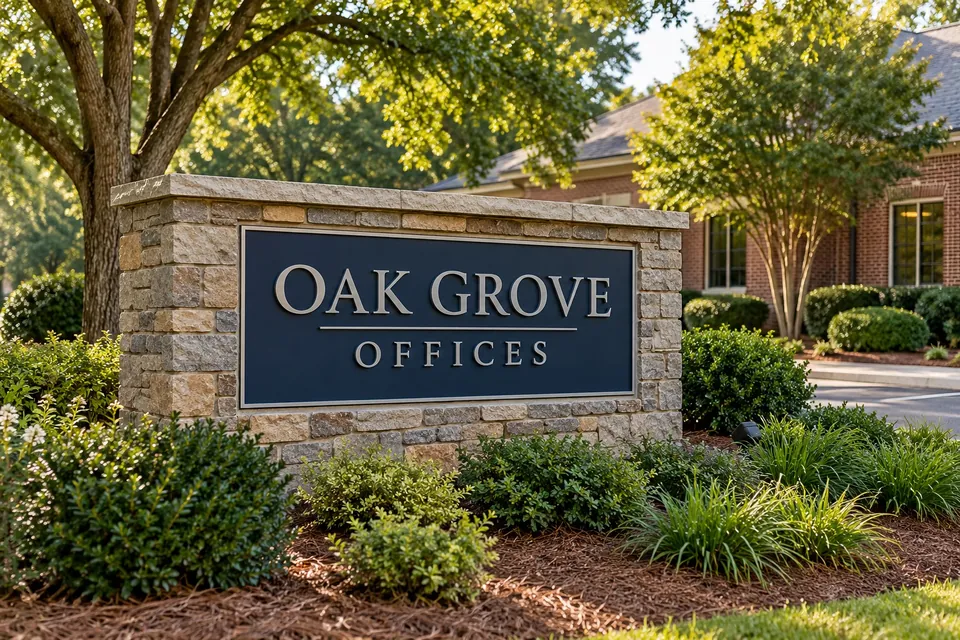
A monument sign can establish the lasting community name at the entrance. Supporting directions then guide visitors to the approved meeting point. Keep the name and spelling consistent across the monument, appointment materials and office identity so the visitor can connect them without explanation.
Use a destination list the team agrees on
Decide whether the tour begins at “Leasing,” “Leasing Office” or a named clubhouse. If the office is inside another building, the route may need both a building destination and a final room destination. Write the sequence down and have the leasing staff confirm that it matches their instructions.
- Property identity at arrival.
- Visitor parking or the approved arrival destination where applicable.
- Leasing entrance at the relevant building.
- The meeting instruction at the door.
- A clear return direction when the tour ends by a different route.
Avoid adding arrows wherever there is an empty patch of landscaping. Each sign should answer a decision at the place where the visitor needs to make it.
Plan for temporary leasing arrangements
A community may change its tour meeting point during construction, renovation or a phased opening. Separate temporary directions from permanent property identity so they can be revised without compromising the lasting design. Ask who is responsible for removing outdated signs and updating appointment instructions on the same day.
Post and panel signs may be worth considering for defined directional applications, subject to the actual site and installation brief. Compare the proposed support, placement and replacement method rather than assuming every panel is interchangeable.
Keep promotions out of the permanent wayfinding system
Availability messages and leasing offers change more often than building destinations. Give them a separate, appropriate place and a clear owner for updates. A temporary promotion should not hide the name or arrow a first-time visitor needs.
When several teams can request signs, use a simple inventory with a photograph, location, wording and purpose for each item. This makes it easier to retire duplicate notices and keep the property’s presentation consistent. Review the route again when landscaping or access arrangements change.
Prepare a route-based brief
Bring the appointment wording, an arrival sketch, current sign photographs and the approved community identity. Our apartment signage guide connects exterior identity with building and interior needs. Ask about your community signs with the current tour route and any planned changes clearly identified, so the proposed system supports the way the leasing team actually welcomes visitors.