A construction project can accumulate signs quickly: the project name, developer identity, contractor details, visitor directions, delivery information and opening announcements. When all of them are squeezed onto a single panel, the reader has to sort the information before knowing what matters. A better brief begins with the person approaching and the decision they need to make.
Separate project identity from operating instructions
A project identity board introduces what is being built and who is associated with it. A visitor direction identifies the correct arrival point. A delivery instruction may apply only during a particular phase. These messages can share a design family without sharing one crowded face.
For construction signage in Pittsboro, begin with a location sketch and photographs of the intended sign positions. Identify the public-facing presentation separately from the site team’s operational sign requirements. This guide concerns project communication and layout; required safety, traffic and other regulated signs need their own qualified review.
Write the message list before arranging logos
Gather every proposed name, role, direction and contact detail in a simple document. Beside each item, record its audience, how long it remains accurate and who approves it. This often reveals that a large part of the proposed board belongs elsewhere or is not ready to publish.
- Project identity: the approved project name and concise description.
- Project participants: approved names or logos with an agreed hierarchy.
- Visitor arrival: the destination and the direction required at that point.
- Changing information: phase details or announcements with a defined review date.
Do not give every partner logo equal space by default. Ask the project owner to approve the hierarchy before the designer builds the layout. Late changes to participant prominence can affect the whole composition.
Design for the actual viewing situation
A person arriving on foot can read a different amount of information from someone trying to identify an entrance from a moving vehicle. Document the intended viewing position and keep the message proportionate to that situation. A dense paragraph of project background is better suited to a place where the audience can stop and read.
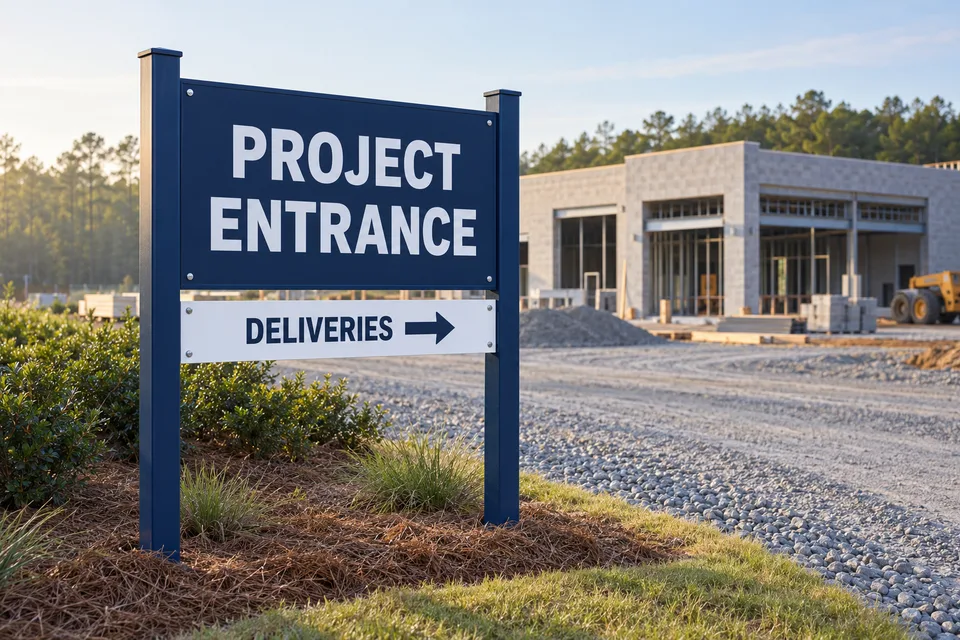
When considering post and panel signs, discuss the complete assembly, intended position and site conditions together. The material and support should follow the approved installation brief, rather than being chosen solely from a small photograph of another project.
Plan for the next phase before printing this one
Construction access and project messaging can change. Identify the parts likely to become outdated and ask how they could be replaced without remaking the entire identity. A distinct instruction panel may be more practical than putting a temporary entrance note inside permanent artwork.
Create a small change log with the panel name, current wording, responsible person and the event that triggers review. A sign stating that visitors should use one entrance needs attention when that entrance changes, even if the board still looks new. Removing an obsolete instruction is part of keeping the sign system useful.
Review arrows on the site, not just on the proof
An arrow that appears logical on a desktop can be wrong when the board faces a different approach. Review each direction with the sign orientation, reader position and destination marked on a sketch. If there are several entrances, use consistent names in the site’s invitation messages and physical signs.
Outdoor directional signs can help organize the sequence, but the authorized site team should confirm the routes and operating instructions. Avoid letting a graphic revision quietly change the meaning of a direction.
Approve wording and responsibility together
Before production, confirm spelling, participant approval, sign position and which details remain provisional. The construction sign overview helps organize those decisions. Request a construction sign discussion with the approved message list, site photographs and a clear distinction between lasting identity and information that will change.