A school can be familiar to staff and families while remaining confusing to a first-time visitor. Several buildings may carry the same identity, a prominent entrance may not be the visitor entrance and a map sent by email may use different names from the signs. A useful visitor sign plan connects the information people receive before arrival with the decisions they face on the property.
Choose one visitor route to review in detail
Ask the school administration to identify the intended route for a first-time visitor under normal operating conditions. Follow that route from the approach to reception. Record each choice: entering the property, finding the relevant parking area, selecting a walkway and choosing a door. Note where a visitor needs reassurance as well as where an arrow is needed.
This is a productive starting point for school signage in Mebane. The sign brief should describe the school’s actual arrival process, rather than assume that every campus uses the same visitor entrance or check-in arrangement.
Create a shared list of destination names
Compare the names in appointment emails, the website, reception instructions and existing signs. If one source says “main office” and another says “administration,” decide whether those words describe the same place. The strongest artwork cannot compensate for a destination that changes names halfway through the route.
Keep the approved destination list short and give one person responsibility for maintaining it. Include building names that visitors genuinely need, but avoid introducing internal abbreviations simply because they are familiar to staff. A useful label should help someone who has never been on the property.
Give identity and directions different emphasis
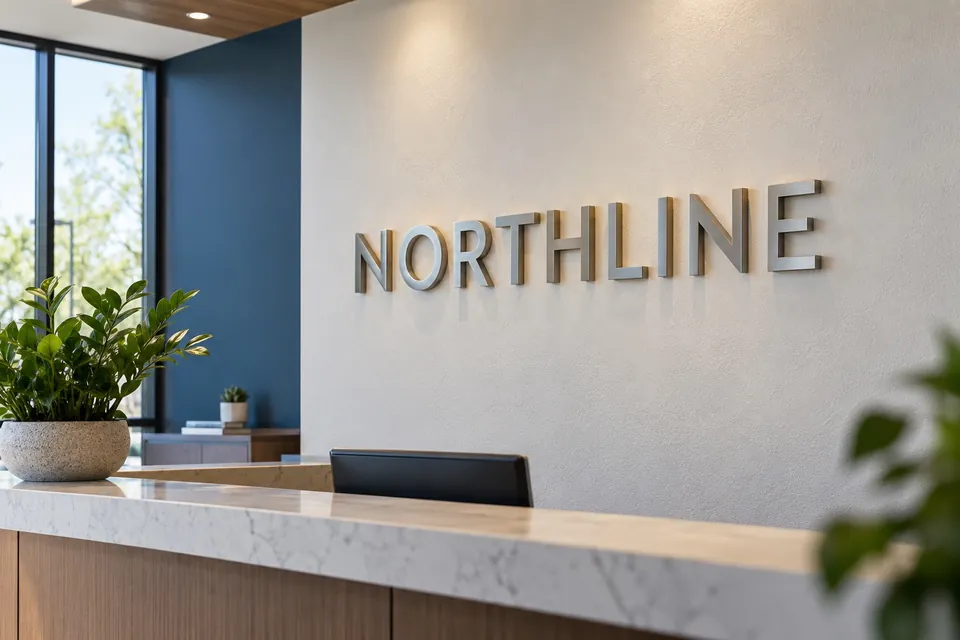
The main monument sign can establish the school’s identity at the property. A smaller directional sign can then explain the visitor route. Repeating the full crest, mission statement and school name on every direction may leave less room for the information the visitor is looking for.
- Use the school identity to confirm the property.
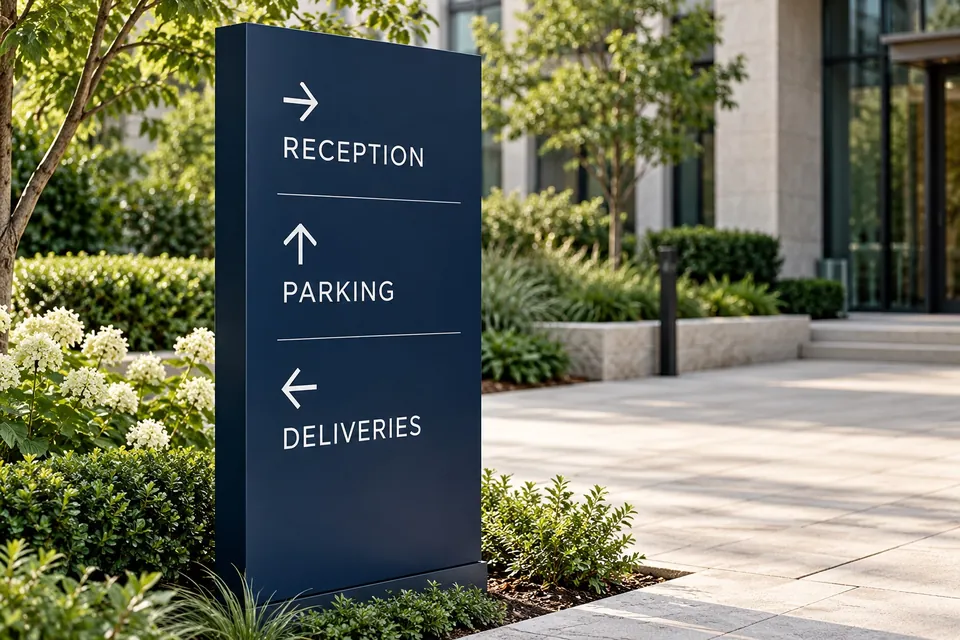
- Use concise destination names at route choices.
- Confirm the visitor entrance at the relevant door.
- Keep temporary event instructions visually separate from ordinary arrival directions.
Review the sequence with seasonal banners, parked vehicles and everyday activity included. Signs should be considered in the setting people actually encounter, not only in an uncluttered presentation photograph.
Plan temporary events without rewriting the campus
A concert, open house or evening meeting may use a different arrival arrangement. Ask how that information will be displayed, updated and removed. Temporary directions should use the same destination vocabulary as the lasting system so guests do not have to learn a second set of names.
Separate the ordinary visitor instructions from the event plan in the artwork files. That makes it easier to revise an event message without inadvertently replacing the everyday route. School staff should confirm all access and operating instructions before signs are produced or placed.
Review the handoff at the door
Once someone finds the visitor entrance, they should understand the next step from the school’s approved instructions. Interior signs can reinforce the destination inside, while door lettering carries the short information needed before entering. Avoid turning the entrance into a collection of notices with no clear first message.
Take photographs from a visitor’s approach and ask someone unfamiliar with the building to describe what they would do next. This review concerns clarity; it does not replace the school’s accessibility, security or operational review.
Build a brief the school can maintain
Bring a route sketch, current photographs, the approved naming list and the person responsible for future changes. The school sign project guide organizes the main formats and planning questions. To discuss a school signage project, explain where visitors currently hesitate and which arrival instructions are already approved.