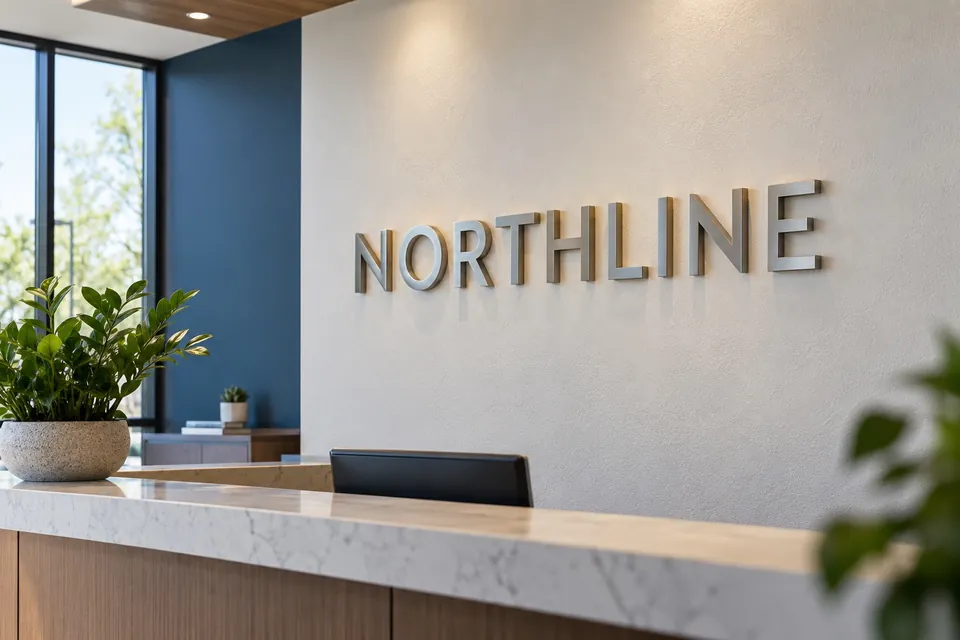
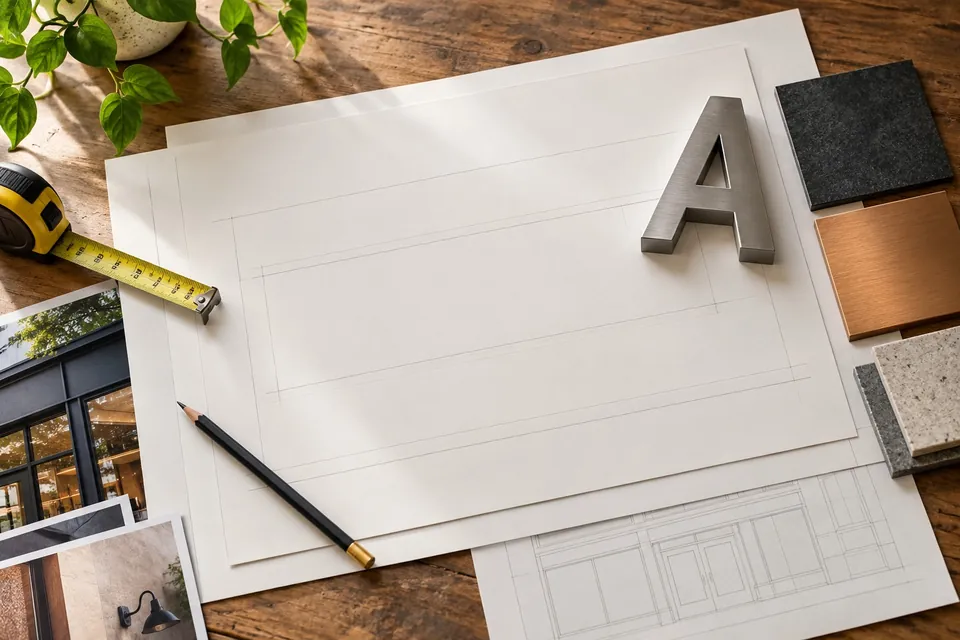
The first time a sign design appears on a building photograph can be exciting. It is also easy to focus on the overall impression and overlook a small error or an unresolved assumption. Before authorizing production, review the proof in several focused passes. This is a different task from preparing a quote request: now you are checking the specific design and scope that will move forward.
Confirm which version is being approved
Start by checking the proof date or revision reference and the list of signs it covers. Make sure every decision-maker is reviewing the same version. If a conversation produced changes after the artwork was issued, request an updated proof instead of assuming handwritten notes and separate emails will be interpreted together.
Create one place for consolidated feedback. Conflicting instructions from several people can leave a designer unsure which change is authoritative. Choose the person who can approve the final version and record any decisions that need confirmation before approval.
Read the text without judging the design
Check the business name against the approved source, even if everyone knows it well. Review phone digits, website spelling, suite labels, punctuation and any directional wording. Read small supporting text as deliberately as the headline. If several signs repeat a destination, compare them side by side.
- Business and department names use the approved spelling.
- Hours and other operational information are current.
- Arrows match the intended sign orientation and reader approach.
- There are no leftover notes, placeholders or former-tenant details.
- Every page of a multi-sign proof has been reviewed.
For a Pittsboro building sign, that text review should include the relationship between the facade identity and any separate entrance lettering. Similar-looking files can contain different wording.
Review dimensions and placement in context
Check the stated dimensions rather than judging size only from a screen image. Ask which measurements have been verified and which remain provisional. A photograph with artwork placed over it is useful for discussing appearance, but the project still needs the agreed measurement and site review process.
Look at the sign with wall edges, joints, windows and neighboring elements visible. Confirm whether the proposed position is centered on a wall, an entrance or another architectural feature. For channel letter signs, review the complete mounting appearance as well as the letter faces.
Distinguish artwork from material decisions
A color on a screen is not the same thing as an approved material reference. Ask how the specified colors, finishes and illumination are documented in the proposal. Where a sample is part of the selection process, compare it with the intended setting and record the chosen option.
Check whether the proof clearly describes the visible construction: separate letters, a panel, a cabinet or another assembly. Ask about any detail you cannot understand from the drawing. The visual presentation and written scope should describe the same intended result.
Identify what approval does and does not cover
Before signing, list any outstanding decisions about property approval, site verification, removal, installation access or related work. Clarify how those items affect authorization to proceed. Do not let a general “looks good” message stand in for a shared understanding of what has actually been approved.
Our sign planning checklist can help trace the decisions made earlier in the project. At the proof stage, the useful question is which of those decisions are final and which still require an explicit answer.
Keep the approved record together
Save the final proof, written scope, approval message and any agreed sample references in one project folder. If a later revision is needed, compare it with that record and confirm the effect before treating it as part of the approved design.
For a larger installation, the business sign overview helps identify related elements that may need coordinated review. If you are preparing a new project, start a sign discussion with the location and intended purpose, then use this checklist when the specific artwork is ready for your decision.